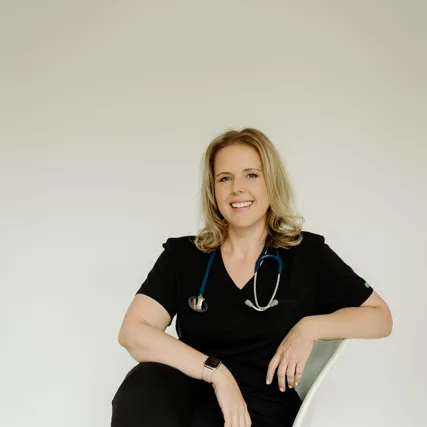
Katherine Stensland handles hormone care at Muse Medical Artistry, an Aurora med spa that otherwise does injectables and laser work. She spent over ten years in internal medicine and family medicine before moving into bioidentical hormone therapy, and she founded her own hormone practice which partners with Muse. Hormone care is sold as a monthly membership that covers the hormones, lab panels through the year and several follow up visits. She prescribes hormones as creams, patches, injections or pellets and settles on the form with the patient. Pellet insertions are billed on their own and are expected every four to six months. Consultations and follow ups can be done virtually, though treatments themselves are given at the Aurora clinic.
Michelle Barhaghi is the only doctor listed at The Group for Women, a small obstetrics and gynecology office in Aurora. The practice lists its services under headings that include yearly exams, family planning, pregnancy care, mid-life woman changes and gynecologic surgery, and the mid-life heading covers bladder control problems and management of perimenopausal and menopausal concerns. She is a certified Biote provider, and the hormone care is described as the Biote Method of bioidentical hormone replacement therapy. She is double board certified in obstetrics and gynecology and in integrative medicine, and she says she weighs lifestyle, environment and relationships when considering treatment options. Much of her surgical work is minimally invasive treatment of fibroids, ovarian cysts and other pelvic disorders, and she names endometriosis as a special interest. She grew up in Aurora and went to school here before training in New York and New Orleans, and she also displays a certification in treating urinary incontinence with the InTone device.
She is the only OB-GYN at Intermountain Health's East Crossroads Clinic in Aurora, so the women's health care there is hers. Alongside general gynecology and obstetrics she takes menopause visits through Intermountain's menopause program, which is built for women roughly 35 to 65 with perimenopausal or postmenopausal symptoms. You fill in a symptom questionnaire first, then get 30 to 60 minutes to go through symptoms and leave with a care plan, and the program says a physical exam usually is not needed. Follow-ups are half an hour, and the program runs both video and in-office appointments. She works with FDA-approved hormone therapy and non-hormonal medication, and adds lifestyle and wellness counseling. She grew up in Parker, came back to Denver for her residency at Saint Joseph Hospital, and her other main interest is minimally invasive gynecologic surgery.